

Play therapy isn’t just for children — it’s for families. Many of our sessions include parent involvement, giving parents insight into their child’s emotional world and practical strategies to use at home. Shared play experiences can rebuild connection, repair attachment, and help parents feel more attuned to their child’s needs.
A safe outlet for feelings like anger, sadness, fear, and confusion
Practising decision-making and new ways of coping in a low-stakes environment
Developing verbal and non-verbal skills with less pressure
Building grounding and calming tools that transfer to everyday life
Strengthening connection with family, peers, and trusted adults
Building a sense of capability and self-worth through mastery in play
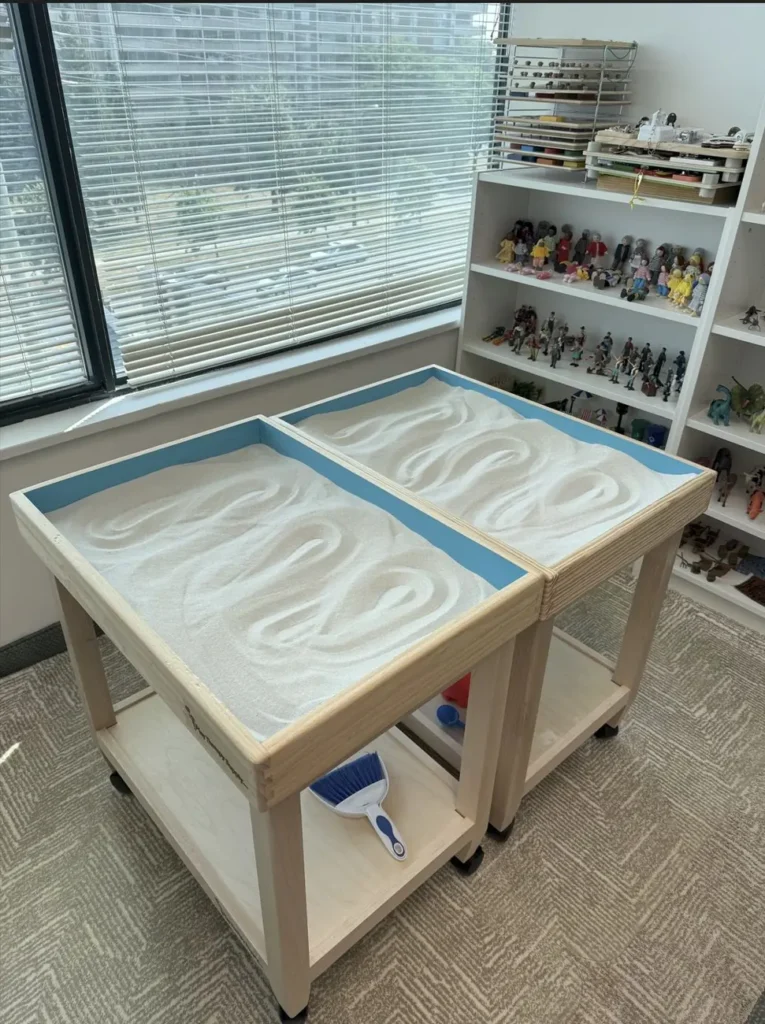
Play therapy is a structured, evidence-based form of therapy in which a trained therapist uses play — toys, art, sand trays, and games — to help children express, process, and resolve emotional, behavioural, and relational challenges. The therapist guides the session with therapeutic intention, using the child’s play as a window into their inner world.
Play therapy is most commonly used with children ages 3–12, though adapted approaches can be used with teenagers and adults as well. At Batool Psychotherapy, we offer play therapy for children as young as 4.
A Certified Play Therapist (CPT) is a credential issued by the Canadian Association for Play Therapy (CAPT), recognizing therapists with advanced training and supervised experience in play therapy. Maimoona Batool holds the CPT designation, making Batool Psychotherapy York Region’s only Certified Play Therapy Centre.
The length of play therapy varies by child and concern. Short-term concerns may resolve in 8–12 sessions; more complex trauma or developmental work may take longer. Your therapist will provide an estimate after the initial assessment.
Play therapy sessions at Batool Psychotherapy are delivered by Registered Psychotherapists, and many extended health benefit plans cover psychotherapy. Please check your plan or contact us to discuss coverage options.